
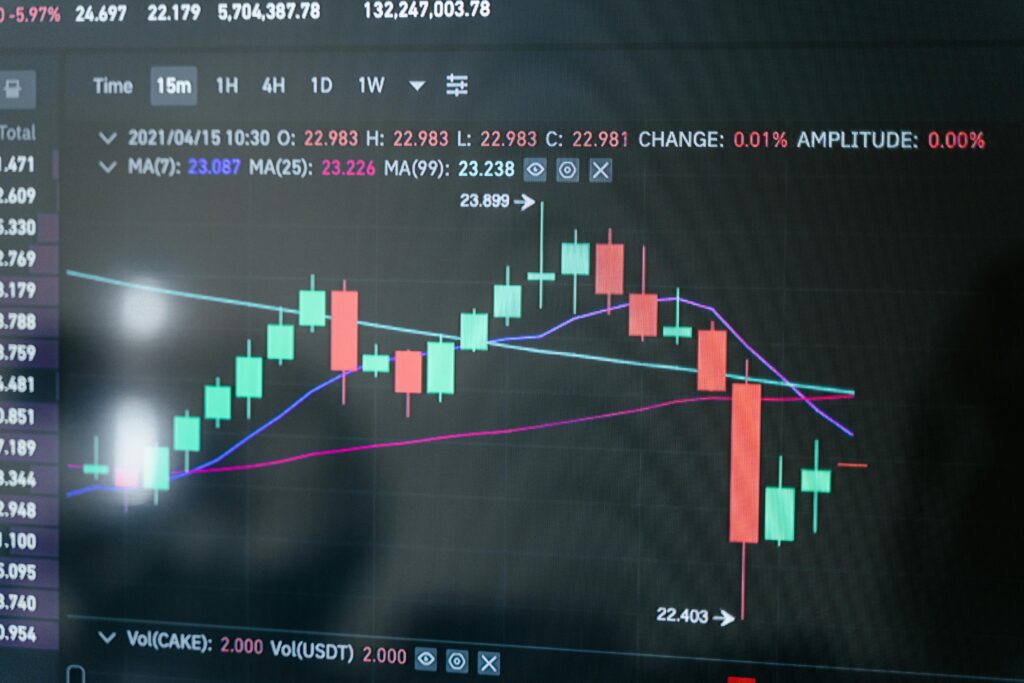
The financial markets closed with notable movements, influenced by recent central bank policies. The USD displayed strength, closing higher against major currencies, though its performance varied throughout the week.
Central Bank Policies and Market Influence
This week’s forex markets experienced fluctuations largely due to central bank policies and economic indicators. In the US, stocks have maintained positive momentum, marking the fourth consecutive day of gains for major indices. The opening of today’s trading session showed stocks easing into positive territory, buoyed by consumer sentiment and inflation adjustments, which were better than preliminary estimates. For detailed market insights, visit Investopedia.
According to President Trump, the market’s ability to acclimate to ongoing trade policies, such as high tariffs, suggests resilience despite potential inflation and supply chain disruptions. The NASDAQ index impressively recovered from earlier losses, closing the week with a notable 6.7% increase. Similarly, the S&P index saw a 4.59% rise over the week.
In Europe, equity markets mirrored the positive trends seen in the US, with key indices like Germany’s DAX and the UK’s FTSE 100 closing significantly higher. The DAX rose by 4.89% for the week, while the FTSE 100 saw a 1.69% increase.
The bond market also reacted to central bank decisions, with US Treasury yields falling across all terms. The 10-year yield dropped by 8 basis points over the week, while similar declines were observed in the 5 and 30-year yields.
The spreads between yields reached new levels since January 2022 but experienced slight reductions by the week’s end. A dynamic bond market reflects underlying confidence in central bank strategies and economic stability.
On the currency front, the USD strengthened against major counterparts today, with significant gains seen against the JPY and CHF. However, weekly performance was mixed, with the USD gaining against the EUR and JPY but losing ground to the GBP, AUD, and NZD.
Conclusion: Impact of Central Bank Policies
Overall, central bank policies continue to exert significant influence over the forex markets. The USD’s mixed performance this week underscores the complexities of global economic dynamics. Recent data suggests stock markets are adapting to geopolitical and economic changes, maintaining stability amidst uncertainty.
At Bakara Invest, our analysis suggests that central bank policies will play a critical role in shaping forex trends in the coming months, with investor attention sharply focused on economic indicators and policy shifts.
For more Forex market insights, visit our Forex News Section.
